
 Strengthening Transit Through Community Partnerships
 I did not come to this work from the outside looking in.
I grew up in Detroit. East Side. I know what it looks like when the systems around you do not work — and when the people responsible for them have information, resources, and answers that never quite reach you. That gap is part of why I became a planner. Not because I saw community as something to serve from a distance, but because I am part of community. That lived experience is the lens I bring to everything I do, including my role as CEO of the Center for Neighborhood Technology.
Across my career — in city government in Los Angeles, as Chicago Recovery Plan Director at the Department of Planning and Development where I oversaw nearly $250 million in community investments, and now leading CNT — I have run into the same wall. Data structures in this country have never been transparent, accessible, or truly useful for the communities that need them most. That is not an accident. It is a design choice. Our field was built that way. Community organizers and grassroots leaders have been naming this problem for decades.
What is different right now is the scale and the visibility. What used to happen in the fine print of policy decisions and inaccessible portals is now happening in the open. Flagrantly. At the federal level. And people who never had to think about where their data came from are being forced to pay attention.
That matters — not because the problem is new, but because now we have a real chance to name it clearly and build something better.
The Problem Is Bigger Than Missing Federal Websites
Yes, the federal rollbacks are alarming. Since January 2025, agencies have removed, frozen, or degraded a significant share of the tools that planners, community organizers, and local governments rely on. The Guardian reported extensively on the scope. The EPA's EJScreen — which showed pollution burdens layered with neighborhood demographics down to the census block level — was taken offline in February 2025. The Climate and Economic Justice Screening Tool came down the day after inauguration. The Department of Transportation removed the Equitable Transportation Communities Explorer, which mapped transit access and transportation cost burden by census tract, alongside the formal end of Justice40. The Environmental Data and Governance Initiative documented 70 percent more federal website changes in the first 100 days of 2025 than during the equivalent period eight years prior. Within one month of inauguration, nine federal equity screening tools were gone.
But the federal rollbacks accelerated a problem that was already there. Even before a single dataset was deleted, communities were operating at a disadvantage.
Government agencies at every level struggle to share information publicly — and struggle even more to share it across departments. Data about housing, transit, flooding, air quality, and public investment often lives in separate silos, collected by different agencies using different systems with no common standard and no coordinated release. This means that even when the information exists, the people who need it cannot access it — and the agencies that hold it cannot use it together to solve problems in a coordinated way. A city department tracking flooding may not be talking to the one tracking health outcomes. A transit agency may not be coordinating with the housing authority on where new developments are planned. The data is there. The connections are not being made.
At the same time, private companies are playing an increasingly large role in data collection. The expansion of data centers across the region and the arrival of quantum computing infrastructure in Chicagoland signal just how much the private sector is investing in data capacity. Technology platforms, logistics companies, real estate firms, and AI developers are gathering enormous amounts of information about how communities work, where people move, and what neighborhoods are exposed to. Some of that data could be used for tremendous public good. But right now it is largely held as a private asset, governed by terms that communities had no part in setting — and almost never shared in ways that enable neighborhood advocacy.
Even our partners in the data and research ecosystem — universities, civic technology organizations, policy institutes — are doing work that too often stays within professional circles. The insights exist. The analyses are being done. But they do not always reach the community organizations that could be using them to make decisions and take action right now.
And then there is the data that simply does not exist yet — because no agency has been asked to collect it, or because the communities most affected have not had the power to demand it.
Data that is removed. Data that is siloed. Data that is privatized. Data that is underutilized. Data that was never created. The result in every case is the same: communities cannot advocate for what they cannot see.
The Balance of Power Shifts When Data Is Out of Reach
This is a power problem, not a technical one.
When community data tools disappear or go unused, a neighborhood group trying to prove that their block floods every summer does not just lose a website. They lose standing. They lose the ability to walk into a public meeting and say: here is the evidence for what we already know from living here. Large institutions — government agencies, developers, well-resourced private actors — retain access to data through legal databases and professional networks regardless of what is publicly available. Community-based organizations usually do not.
I have watched this play out throughout my career. Residents show up to public meetings with lived experience that is undeniable and still lose the argument to a spreadsheet they were never given access to.
This moment is also bigger than any one federal administration. The race to build AI systems and data infrastructure is accelerating. Technology is not inherently the problem — but it requires guardrails and values. It requires asking who benefits, who is harmed, and who gets to decide. Those are exactly the questions that go unanswered when data governance is left entirely to institutions with no obligation to share.
What CNT Is Building — and Why Now
At the start of 2025, CNT faced the federal funding freeze alongside many other nonprofits. We made hard decisions and did real soul-searching. Out of that season came something clarifying: our first-ever Theory of Change and a sharpened sense of who we are here to serve.
We went back to our partners. Community-based organizations, practitioners, local government staff, data experts. What we heard across every table was a version of the same frustration: the data we need either does not exist, is too hard to find, is too technical to use, or simply never reaches the communities who could act on it. Federal rollbacks made things worse. But the foundation was already cracked.
In many ways, CNT already operates like a data trust. We gather, steward, and make accessible data for community benefit. We partner across sectors. We center the people most affected by the decisions the data informs. And when critical data does not exist, we help create it.
The Chicago Truck Data Portal is a clear example. In partnership with Little Village Environmental Justice Organization, CNT deployed truck counting cameras to document the relationship between truck traffic and air quality in a community that already knew what it was experiencing — but needed data to prove it and demand change. That is what it looks like to fill a gap the system left behind. The Urban Flooding Baseline Tool, built with the Southeast Environmental Task Force, does the same — translating technical environmental risk data into a tool communities can actually use. And tools like our Housing + Transportation Index (H+T) pull together nationwide datasets to surface connections between transportation access, housing costs, and economic opportunity that no single agency was capturing in one place.
What we are building now is the formal structure to match the work we are already doing — and to open the door for partners to build it with us.
The Community Data Trust and Knowledge Lab
So what is a community data trust? Think of it the way you think about a land trust: a legal entity that holds land on behalf of a community, with clear rules about how it is used, so no single actor can control or extract from it for private gain. A data trust works the same way — an independent legal structure that provides stewardship of data for the benefit of a group of people and organizations, with governance built in from the start.
The Trust is designed to address every dimension of the problem. It will preserve and organize data at risk of being lost. It will break down silos by connecting datasets from government, research, and civic partners that have never lived in one accessible place. It will engage private-sector data holders about access terms that serve community benefit. It will amplify the work of research partners so their findings reach the communities who need them. And where critical data does not exist, CNT will help create it.
The governance structure matters as much as the data itself. Communities serve as co-governors, with real authority over how data is used to address the challenges they define. Publishing a dataset is not the same as building public trust. Trustworthy knowledge requires relationships, accountability, and genuine community input — not as a checkbox, but as a design principle.
Where We Are and Who We Are Looking For
With support from the Polk Bros. Foundation, we spent the past year doing the essential groundwork: interviewing partners, studying existing data trusts across the country, and developing the vision, purpose, and values that will anchor CNT's Data Trust. We held our first stakeholder convening in June 2026, bringing together thought leaders and data experts from across our ecosystem to help shape the path forward.
Building the legal structure and governance body takes time and real investment. But we are not waiting for the structure to be finished before doing the work. CNT is operating as a data trust today — stewarding data, filling gaps, supporting partners, and building the knowledge infrastructure that neighborhoods need to advocate effectively. We are formalizing that structure as we grow.
Justine Ingram, Research Manager at World Business Chicago, put it simply after our June convening: “The most important value of a data trust is independent stewardship, because it creates a level of communal sufficiency that can better withstand a challenging social and political environment.” That is exactly what we are building — infrastructure that does not depend on favorable political conditions to function.
We are looking for two things. Partners — community-based organizations, government agencies, academic institutions, and private entities — who want to be part of building and governing this trust together. And funders who understand that investing in data infrastructure is investing in community power, and who want to help us formalize and expand what we are already doing.
“The most important value of a data trust is independent stewardship, because it creates a level of communal sufficiency that can better withstand a challenging social and political environment.” - Justine Ingram, World Business Chicago
Public knowledge should remain public. Communities deserve the tools to tell the truth about their own lives — and to use that truth to create change. If you want to partner with us or support this work, reach out to Miriam Savad at msavad@cnt.org or Molly Wagner at mwagner@cnt.org.

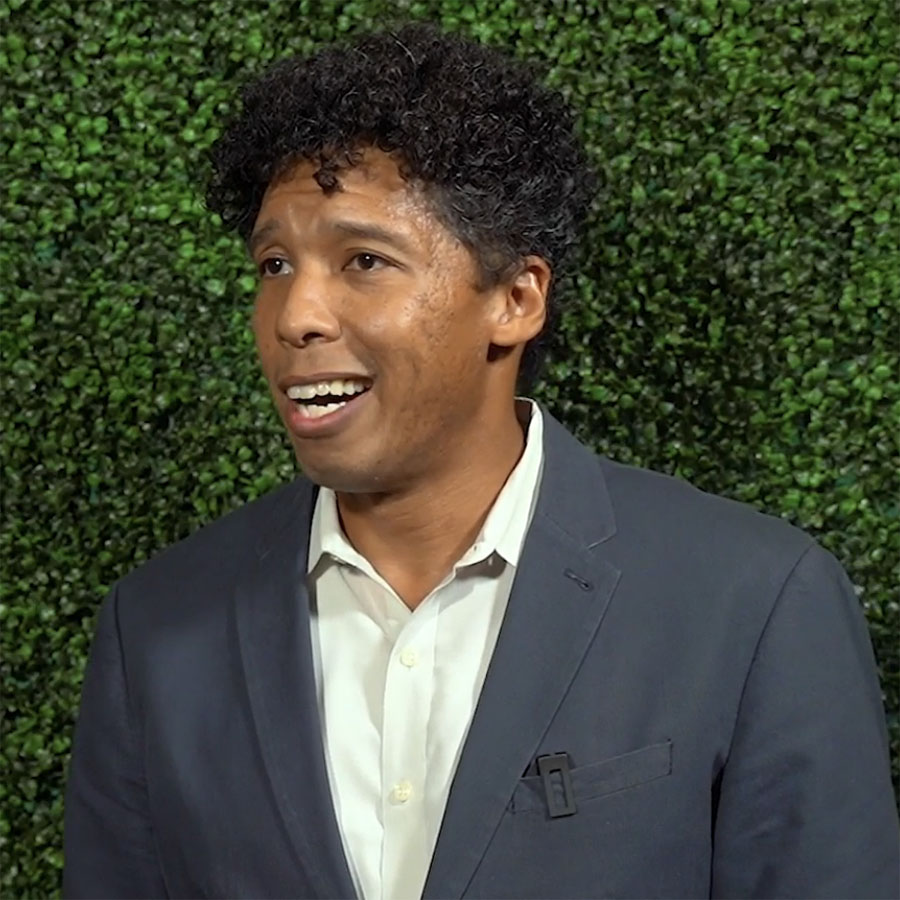
Nina joined CNT in September 2023 as our CEO. As a native Detroiter, Nina understands firsthand how the built environment shapes the lives of society’s most vulnerable populations. This fuels her passion for empowering people to be change agents through urban planning.
Nina Idemudia
Chief Executive Officer
Chief Executive Officer