
 Strengthening Transit Through Community Partnerships
Transportation planning works best when the people most affected by infrastructure decisions have a meaningful role in shaping them.
That belief is central to the Transportation Equity Network coalition, known as TEN, which is stewarded by the Center for Neighborhood Technology. Through TEN, community-based organizations have been working with planners at the Chicago Transit Authority and the Chicago Department of Transportation to bring deeper, more meaningful engagement into the heart of communities, particularly around bus-priority initiatives such as the Better Streets for Buses Plan and the ongoing Bus Priority Corridor Study.
This work is rooted in relationship-building. Community-based organizations participating in TEN have worked to build relationships with CTA and CDOT that prioritize community voices and help identify community priorities. By funding CBO-led grassroots efforts, TEN has supported communities in engaging their neighbors around bus infrastructure in ways that are local, accessible, and grounded in lived experience.
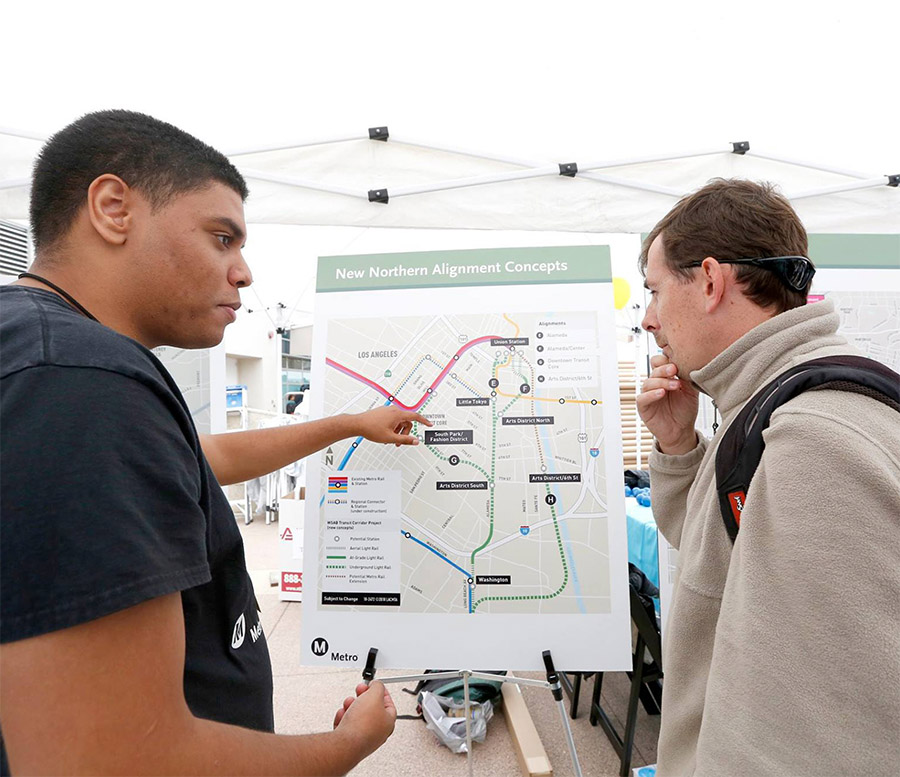
These engagements have taken many forms, including community town halls, focus groups, field visits, aldermanic engagement, and more. Just as importantly, TEN has provided a platform for the insights gathered through these efforts to be shared directly with CTA and CDOT, helping build a more collaborative approach between communities and government.
On June 12, TEN had the opportunity to share this work at Transport Chicago, a local conference where transportation planning and advocacy leaders gather each year to highlight important work happening across the sector. CNT helped organize the panel, “Building Meaningful Engagement through Communication,” which included representatives from CTA’s planning and marketing departments.
The panel elevated lessons and insights from two community-based organizations that worked with TEN to host grassroots engagements in their communities around bus priority corridors: Endeleo Institute and Grow Greater Englewood. Endeleo Institute engaged around the Cottage Grove corridor, while Grow Greater Englewood engaged around the 55th/Garfield corridor.
CNT sponsored the participation of these CBOs to help elevate community leadership in transportation planning spaces. Too often, these spaces fall short of fully promoting community voices and perspectives. By supporting CBO participation, CNT helped ensure that the conversation included those with direct experience leading engagement in their own communities.
The discussion explored the successes and challenges of communicating with the public, the importance of grassroots engagement, and the role that community-centered work can play in building momentum for equitable and intentional transit projects.
We are grateful to our panelists from TEN, Adonnis Platt and Dr. Kirk Harris, for sharing their leadership and insights. We also thank Jason Meter, Eric Munn, and Lucien Liz-Lepiorz from CTA for joining the conversation and contributing to a meaningful discussion about how public agencies and communities can work together more effectively.
CNT is excited to see this work continue to grow. We also thank the steering committee at Transport Chicago for helping bring this work to light and for creating space to highlight the importance of community-led engagement in transportation planning.
Through TEN, CNT will continue working alongside community-based organizations, public agencies, and advocates to support transportation projects that are not only technically sound, but shaped by the people and communities they are meant to serve.

Julia is a planner and policy advocate interested in the intersections of equity and transportation, as well as building community power and civic engagement through organizing. She joined the Center for Neighborhood Technology (CNT) as a Transportation Coalition Associate in 2023.Her past work experience in the public and non-profit sectors has given her skills in qualitative research, data analysis, community development, and planning. Prior to joining CNT, she worked as a research assistant with the Institute for Policy and Civic Engagement at UIC, a transportation planning intern with the Chicago Metropolitan Agency for Planning, a research intern with Equiticity, and a Program Delivery Manager at FEMA. Julia holds a master’s degree in Urban Planning & Policy from the University of Illinois at Chicago and bachelor’s degrees in Economics and Urban Studies from the University of Texas at Austin. In her spare time, she loves reading, writing poetry, and going on long runs and bike rides down the Chicago lakefront.
Julia Hage