

 Strengthening Transit Through Community Partnerships


Planning, transit, and other agencies often work with Center for Neighborhood Technology to facilitate or develop processes to gather feedback or solicit input for infrastructure and other projects. One way we're sharing this work is through the recently released Community Accountability Framework tool to evaluate the success of such efforts.
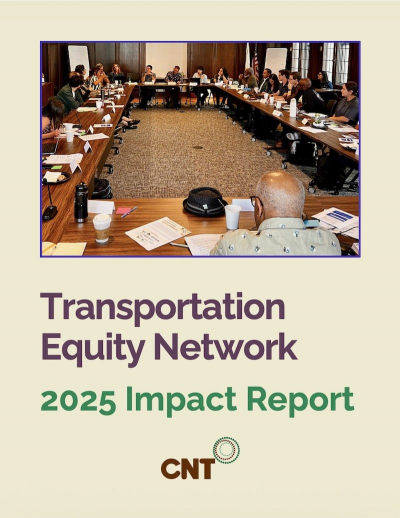
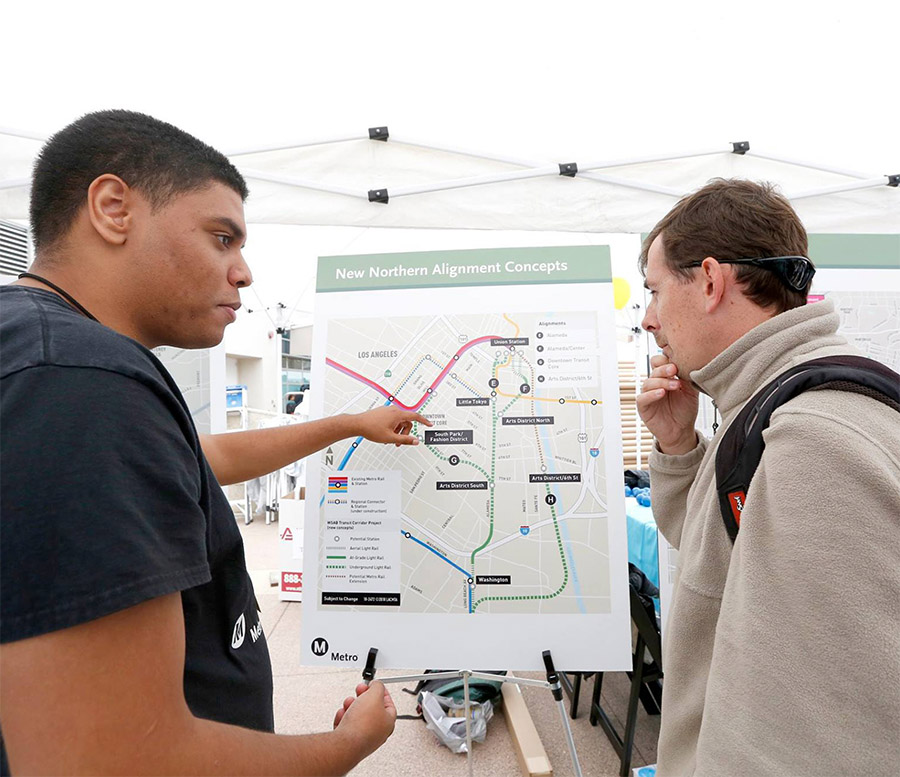
This builds on past work, such as our 2024 publication Equity in Practice: Strengthening Transit through Community Partnerships, co-released wiith TransitCenter, on LA Metro's work in this area. Staff member Cyatharine Alias reflects in this post on best practices, based on our work producing the Framework tool and other projects.
Over the past several years, CNT has been working with government partners to shift culture and power dynamics to ensure that those who are most impacted by government policies and programs are participants in policy making. Today’s deep dive is into the lessons learned from the facilitation of Community Advisory Committees.
Community Advisory Committees create space for community members and government staff to meet, learn, discuss, and provide feedback on the development and implementation of policies, frameworks, and projects. CNT believes that Community Advisory Committees are a structure that can deepen trust and collaboration between communities and government and increase the effectiveness of community members to shape policy.
Seems easy enough...however, many governments fail to meaningfully collaborate with Community Advisory Committees. The following are some lessons learned in how to do so successfully.
Prepare internally
Set the foundation by convening staff across agencies and levels to build shared knowledge on the issue from an equity lens. It builds relationships across staff, creates shared language, and prepares staff to engage with community members.
When a Community Advisory Committee is convened, members’ ideas and comments are less likely to be met with blank faces when they talk about the issues that impact their lives. Additionally, staff can provide an in-depth understanding of the work they do, current operational challenges, and brainstorm how to incorporate ideas realistically. Then, get clear on the purpose and authority of the Community Advisory Committee and create buy-in for the value-add of community perspective.
Compensate residents and Community-Based Organizations
When inviting community members to participate in the Community Advisory Committee, pay people for their time and their expertise. They are consultants; their experiences are information that they will be sharing, and their networks are an important resource improving the overall project. To do this, include community compensation as part of the departmental or project budget.
Residents from repeatedly disinvested communities have historically been passed over by many policy opportunities to build their wealth and thus volunteering may not be a feasible option for them. Further, residents’ time, expertise, and networks are often overlooked and undervalued, and the expectation for them to volunteer perpetuates that line of thinking.
Determine a rate that is respectful of people’s time by discussing with trusted community advisors. If paying residents directly is infeasible due to current policies, consider providing gift cards (digital or hardcopy) or another form of support, and work on developing or shifting the compensation policy.
Note that shifting the compensation policy can take time because it means changes to internal processes and requires conversations with several departments to identify and navigate barriers. In addition to the creation of the policy, implementing it during a variety of community engagement opportunities will further refine and smooth the process. We recommend getting started on this process early on.
This Shelterforce article offers several real-life examples of compensation in practice. Review operational policies to understand how to ease the compensation process, determine alternate compensation options, and make clear the expectations to participate through an agreement, so that there is clarity on expectations for actively participating (such as meeting time, time spent out of meetings, deliverables, etc.).
The agreement should also hold the government partner accountable to only asking community advisors to participate for what they signed-on for, not more. For ideas on how to improve your policies, review this guidebook to compensation from Urban Institute.
It is important to remember that though resident participants are signing agreements and being compensated, they are not typical consultants. Government functions to serve their residents, so the relationship is not merely transactional. Rather, it is an opportunity to improve government and community relations. The following lessons learned highlight how to do so.
Thoughtful, intentional meetings
Think through the outcomes or decision points you want to achieve over the arc of the meetings, milestones, and at what pace will achieve those outcomes. For each meeting think about:
- what contextual information needs to be shared so that participants understand how this government currently works,
- what actions, report backs, discussions, and activities will build participant trust with government and lead to fruitful discussions (this includes being conscious of staff speaking time and posture to responding to community advisors),
- how previous meetings’ work and public engagements impact the current iteration of work,
- which staff across departments should participate in the meetings to build participants’ network and answer questions,
- what stage in the process this meeting is,
- how notes and slides will be recorded and accessed.
Provide ample time for participants to review materials ahead of the meeting and provide a summary of the materials at the meeting to accommodate different learning styles.
Communicate and be open
Plans and processes rarely progress as expected. Additional time may be needed internally to review documents and receive approvals or an external event may require the government agency to shift focus for some time. Communicate these pauses and the reasons why to participants and continue to give them updates in the meantime of what is happening internally.
This honesty with participants will show that the government values their investment in the process and the good-faith effort to move things along. In addition, as events or issues may come up for participants and their communities, be open to their questions and concerns. Connect them to the most relevant departments. After a process is complete, communicate updates on a regular basis to show feedback received is being implemented.
Respond, show the work
As meetings continue, show participants when and where feedback was incorporated and if not, explain why. When they provide ideas for improving public engagement, explain what is in process and what has been accomplished, and ask for improvements. This makes clear that the Community Advisory Committee is valued and that their participation is not being used for optics, but rather for real change.
Sustain the engagement
Think about how to incorporate the Community Advisory Committee into standing committees for the implementation of policies and projects. Consider how community members can become embedded into other processes throughout the government. Share the learnings from this experience internally to build that buy-in and shift the culture.
Hire a consultant
Sometimes government agencies do not have the experience or capacity to meaningfully engage constituents in this manner; in some cases it is best to seek external assistance to form and facilitate Community Advisory Committees. Hiring a consultant would not only help with the committee but also be useful for teaching government staff how to best engage with their constituents and build trust.
As we continue to face multiple challenges to democracy, it’s more important than ever that local governments double down on valuing community members. Reach out if you want to learn more on how CNT can help you establish a Community Advisory Committee and support its implementation.