


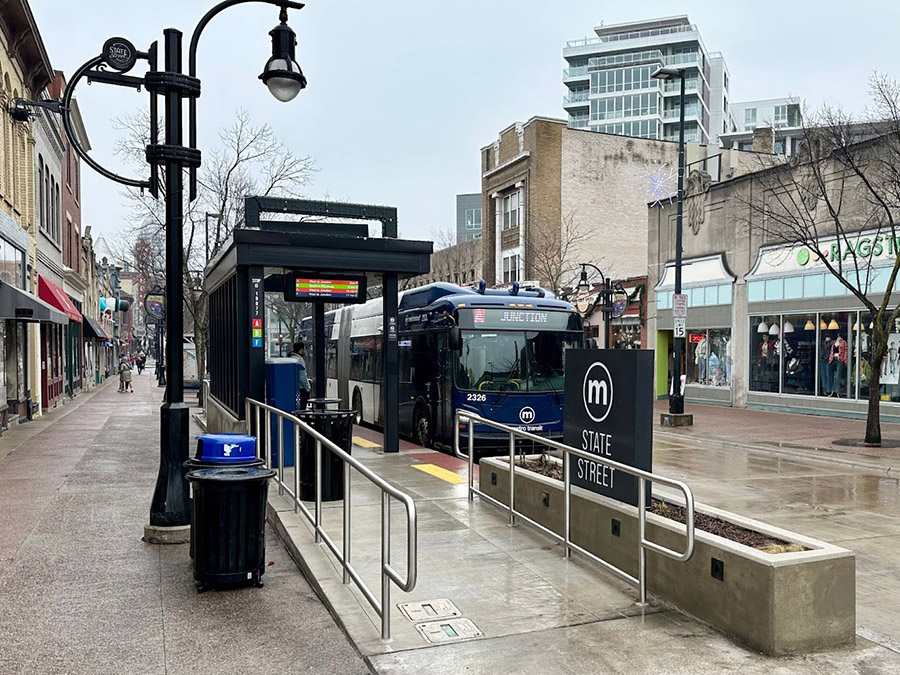
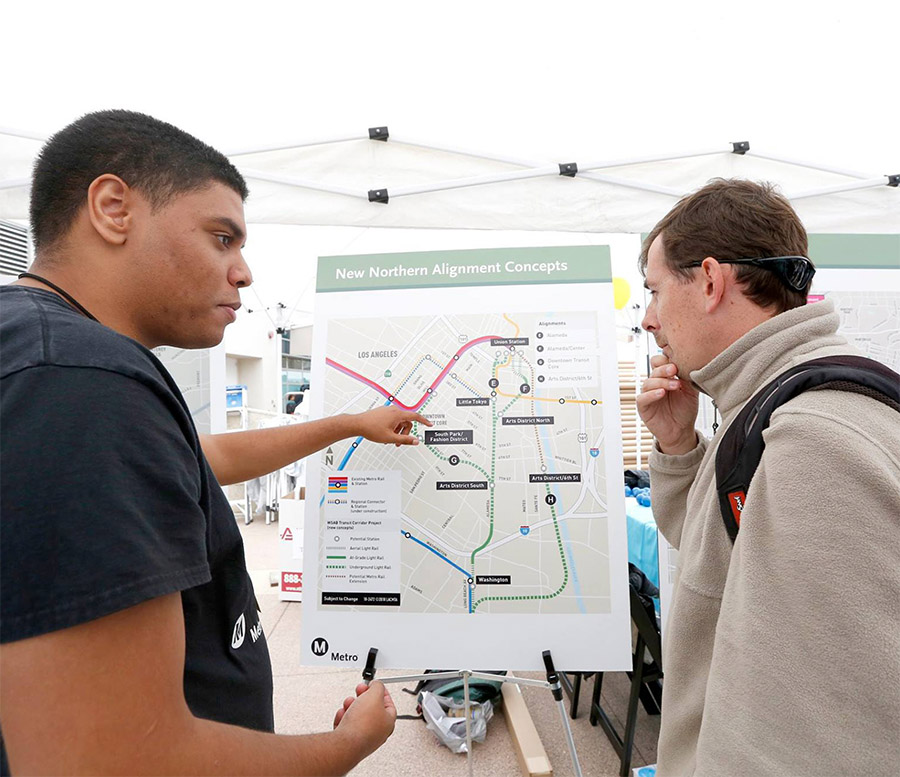
A diverse, walkable community depends on a transportation infrastructure that provides a variety of ways to get around, serving pedestrians and transit-riders as well as drivers. Quality of life is key to the success of any urban community. A good transportation network also relies on healthy communities. This can be affected by housing sites, affordable and convenient transportation, easy access to shopping and services, safety and equity.
CNT promotes research and action on understanding housing and transportation affordability, revitalizing and developing communities and public involvement in shaping policy. CNT has worked on a number of projects designed to encourage community development and promote transportation options.
To learn more about CNT’s work in Transportation and Community Development, take a look at our projects, tools and resources on this page.
Tuesday, July 1st, 2008 at 5:04 pm
Record-high gasoline prices are inspiring more Americans to celebrate Independence Day close to home. But those who live where they can walk, bike or take public transit to their local fireworks displays and other amenities are benefiting from another sort of independence - from gasoline.
New research from CNT shows that people who live close to transit, jobs, schools and retail - typically in cities and inner ring suburbs - spend up to $2,100 less annually on gasoline than residents of outer ring suburbs, where homes and amenities are generally more spread out and require more driving.
The research, which compares average household gasoline expenses based on the average number of vehicle miles traveled per household, examines 52 U.S. metropolitan areas across the country - encompassing 60 million households. It also looks at percentage of household income spent on transportation, number of vehicles per household, transit ridership and other variables on a neighborhood-by-neighborhood basis.
The gas-cost findings are a newly released addition to the Housing + Transportation Affordability Index, an interactive mapping web tool at http://htaindex.cnt.org.
Read the entire press release.
Comments (0) »
Wednesday, June 25th, 2008 at 11:16 am
Without sufficient alternatives to driving, American families spent their entire economic stimulus check on high-priced gas. According to new analysis from the Illinois PIRG (Public Interest Research Group), since President Bush signed the tax rebates into law on February 13th, the average household spent over $1500 filling their tanks. Gas costs were higher than average in areas without robust public transportation.
The report highlighted the need to invest in the region’s transit infrastructure to give people an alternative to high gas prices.
“With adequate capital funding from lawmakers, we can invest in our transit network, expand service to communities that need it and make it easier for people to drive less,” said Emily Miller, Advocate with Illinois PIRG.
According to the analysis released by Illinois PIRG, since February when President Bush signed the tax rebates into law, the average cost per household for gasoline has gone from just over $60 weekly to almost $100 per week. Americans have responded to higher gas costs by taking public transportation at record rates in areas where it is available. American drivers traveled fewer miles last year for the first time in almost thirty years.
The Illinois PIRG-released analysis, generated by the Center for Neighborhood Technology (CNT), also shows that neighborhoods around the country with the best access to transit spent an average of $728 monthly on all transportation costs, including gas, insurance, upkeep, and transit fares. Households in neighborhoods with the least access to transit, by contrast, spent an average of $925 per month.
“Here in metropolitan Chicago, residents of transit rich communities like Evanston are able to keep their annual gas costs below $1,490 per year, while residents in communities with less access to transit, for example Hoffman Estates, are spending more than $4,500 per year, almost three times as much, ” said Scott Bernstein, CNT President.
Transit agencies have meanwhile struggled to keep up with the increased ridership volume. Despite the success of new rail routes and bus lines around the country, new transit projects, like the red line expansion, have remained stuck on the drawing board due to lack of funding.
“If Congress wants to do something long-term about high gas prices, it will give people more alternatives to driving,” said Miller. “Unless we make it easier to drive less, American families will be stuck in neutral as they spend more and more at the pump.”
Analysis by PIRG shows that public transportation created net oil savings totaling 3.4 billion gallons in 2006. This is enough to fuel 5.8 million cars for an entire year and to save about $13.6 billion in gasoline at today’s prices. Here in Northeastern Illinois, public transit saved 276 million gallons, the equivalent of saving $1.1 billion at the pump today.
Read the new report, “Squandering the Stimulus”.
For more information about transportation costs in 52 US Metropolitan areas, see http://htaindex.cnt.org
Comments (0) »
Thursday, June 12th, 2008 at 10:42 am
On June 11, Scott Bernstein, CNT President, testified in front of the House Financial Services Committee in support of the proposed “Green Resources for Energy Efficient Neighborhoods (G.R.E.E.N.) Act” by U.S. Rep. Ed Perlmutter (D-CO).
The Bill provides incentives to lenders and financial institutions to provide lower interest loans and other benefits to consumers, who build, buy or remodel their homes and businesses to improve their energy efficiency. This timely legislation reflects foresight and the considered input of a broad coalition of housing advocates, financial institutions, government leaders, developers, and the environmental community.
Bernstein testified in support of the bill, along with suggesting improvements, including expanding “efficiency” in this case to include “location efficiency” - the importance of valuing location to transportation infrastructure as a function of energy efficiency. Read his full testimony, including improvements, here.
CNT helped develop the Location Efficient Mortgage (LEM)—mortgages that help people become homeowners in communities where they can walk from their homes to stores, schools, recreation, and public transportation, saving them money by reducing their need to drive from place to place. LEM’s were available in Chicago, Seattle, Los Angeles and San Francisco from 2001-2004. A recent survey of all the awarded LEMs showed that one had defaulted. In Chicago. for example, of the 41 loans, there were no defaults and 30 percent of the borrowers sold a car.
The G.R.E.E.N. Act is a great start in providing incentives to homeowners in becoming more efficient, but should not overlook the importance of the ‘location’ of a home when determining its ‘efficiency’. Just like the Location Efficient Mortgage, the G.R.E.E.N. Act can be used as a tool for combating foreclosures by revealing hidden costs of inefficiently located housing.
(CNT’s newest tool to reveal these costs is the “Housing + Transportation Affordability Index”, which is now available as an online interactive map at www.htaindex.org).
Comments (0) »